Mulitple 3D printing technologies including the latest printers and materials to meet your quick turn requirements. Large foot-print and nesting capabilities for unique jobs.
Advances in additive manufacturing now offer engineers many options when producing prototypes that can achieve critical tolerances, hold up to high-temperature environments, and withstand stress and impact.
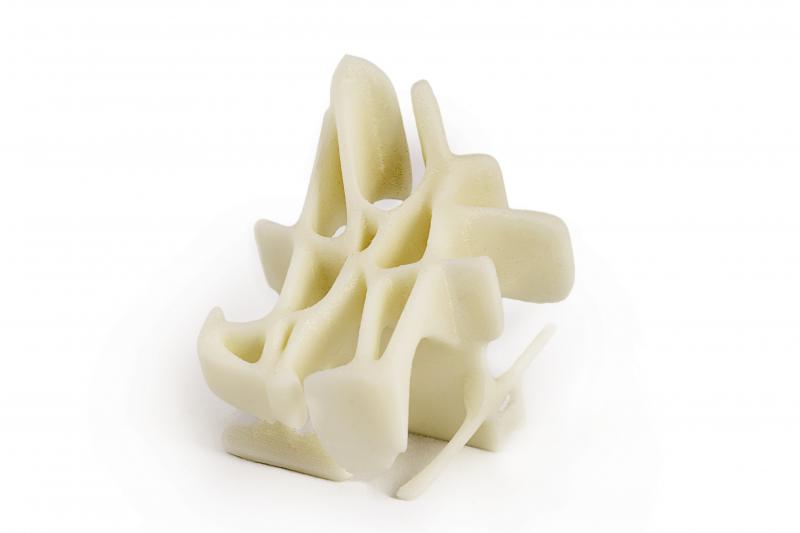
RPM Fast offers HP Multi Jet Fusion (MJF) technology. This is an excellent solution for quick turn nylon (PA12) parts that require short lead times, low porosity, and excellent surface quality. We can produce smooth parts with minimal post processing that are excellent for functional prototypes or even low volume production.
Materials
Fused Deposition Modeling (FDM) is ideal for building durable components with complex geometries in nearly any shape and size. FDM can create parts and prototypes with outstanding thermal and chemical resistance and excellent strength-to-weight ratios. FDM is well suited to support functional prototypes to high-strength tools.
Materials
SLA is a very accurate technology that is ideal for concept models and investment casting patterns (urethane tools). SLA can provide a smooth, high-quality surface finish like an injection molded part when finished properly.
Materials
Carbon 3D is a resin-based technology using digital light synthesis to form complex parts. The new technology produces parts that mimic injection molded like qualities. The parts are isotropic, have exceptional surface finishes, and excellent mechanical properties, making the technology a great option for low volume production as well as high-end prototypes.
Materials
A good process for strong and geometrically intricate components. The SLS process eliminates the need for support structures and allows for complex geometries. Production parts can be durable, water and air-tight, and heat resistant.
Material Options
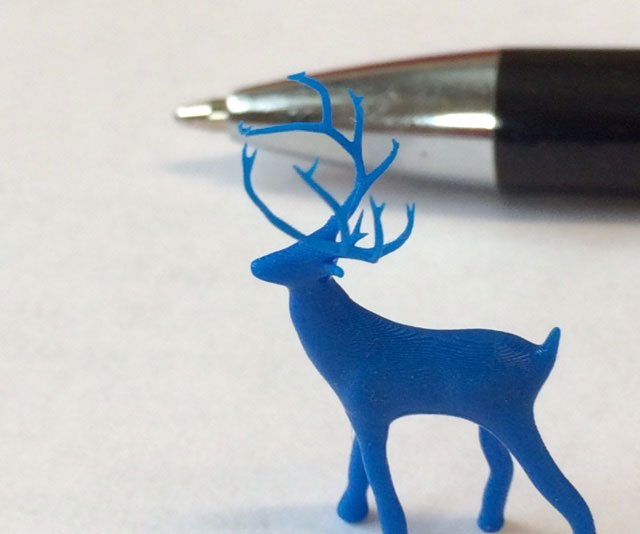
Smooth, accurate, detailed parts that can support thin walls. PolyJet uses a high-resolution (as thin as 16 microns .0006”) ink-jet technology. It’s a great fit for models and prototypes with complex geometries, fine details, and smooth surfaces. Multiple colors and materials can be combined for over-molded parts.

Materials
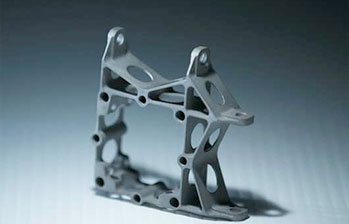
A good manufacturing process for metal parts that can only be printed due to complex geometries. Also, an alternative to casting parts when engineers are still in the prototyping stage.
Material Options