 Skip to content
Rapid Injection Molding emerged as a response to this challenge.
It allows companies to manufacture real injection-molded plastic parts in a fraction of the time required for conventional tooling. These parts are not prototypes in disguise. They are made from production-grade materials, using industrial injection molding machines, and behave like final components. The difference lies in how the molds are built, how long they are intended to last, and how easily they can be modified.
This article explains Rapid Injection Molding in depth. It covers the process, tooling, materials, advantages, limitations, comparisons with other manufacturing methods, and the strategic role it plays in modern product development.
What Is Rapid Injection Molding?
Rapid Injection Molding is a manufacturing process used to produce plastic parts by injecting molten thermoplastic material into a mold, just like traditional injection molding. What distinguishes it is the tooling strategy, not the molding operation itself.
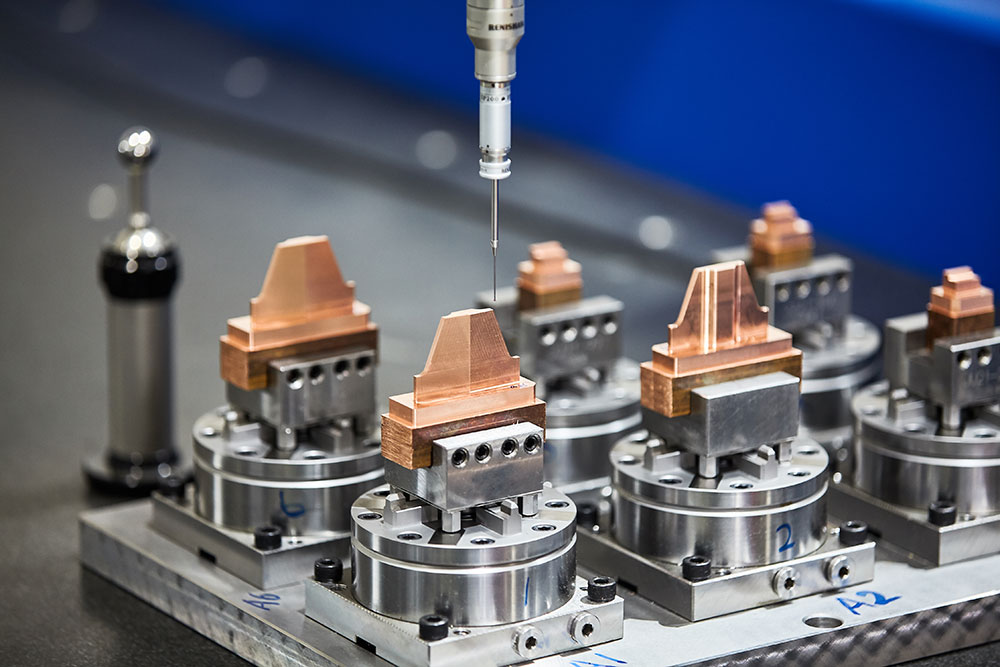
Instead of hardened steel molds designed to last for hundreds of thousands or millions of cycles, Rapid Injection Molding typically relies on aluminum or hybrid molds. These molds can be manufactured faster, modified more easily, and produced at significantly lower upfront cost.
Because the core injection molding process remains unchanged, the resulting parts have the same fundamental characteristics as mass-produced components. Surface finish, dimensional accuracy, and mechanical properties closely match those of traditional injection-molded parts.
Rapid Injection Molding is commonly used for short-to-medium production runs, design validation, pilot manufacturing, and bridge production.
Why Rapid Injection Molding Matters in Manufacturing
The way products are developed has changed. Few companies can afford to spend months preparing tooling before validating demand, usability, or performance. At the same time, customers expect finished products to meet high quality standards from day one.
Traditional workflows often force teams to choose between speed and realism. Fast prototyping methods like 3D printing offer quick results but do not accurately represent production materials or behavior. Traditional injection molding offers realism but demands early commitment.
Rapid Injection Molding bridges this gap.
It allows teams to test real parts under real conditions while maintaining the flexibility to revise designs. This reduces technical risk, financial exposure, and time-to-market pressure, all without sacrificing manufacturing integrity.
How Rapid Injection Molding Works
While the term “rapid” implies speed, the process itself is deliberate and controlled. The time savings come from streamlined tooling and parallel workflows, not from cutting corners.
1. Design and Engineering Preparation
The process begins with part design. Injection molding places strict demands on geometry, regardless of tooling material. Wall thickness, draft angles, ribs, bosses, and undercuts must all be considered early.
Design for Manufacturability (DFM) plays a critical role here. Engineers evaluate how the part will fill, cool, and eject from the mold. Poor design choices can increase cycle times, shorten tool life, or create quality issues.
Although rapid tooling allows easier modification, thoughtful design upfront still saves time and cost.
Materials Used in Rapid Injection Molding
Material selection is one of the strongest advantages of Rapid Injection Molding. Unlike many rapid manufacturing methods, it supports production-grade thermoplastics.
Commonly used materials include:
- Polycarbonate for high impact resistance and optical clarity.
- Nylon for strength, wear resistance, and thermal stability.
- Polypropylene for flexibility, chemical resistance, and fatigue performance.
- Polyethylene for toughness and low friction applications.
- TPE and TPU for flexible, rubber-like components.
- Glass-filled plastics for increased stiffness and structural strength.
Using real materials allows teams to evaluate mechanical performance, environmental resistance, and long-term behavior with confidence.
Production Volumes and Typical Use Cases
Rapid Injection Molding is typically used for production volumes ranging from a few hundred to tens of thousands of parts. The exact range depends on material selection, part geometry, and tooling design.
Common applications include engineering validation builds, pilot production runs, market testing batches, bridge production while steel tooling is prepared, and low-volume commercial products.
For many companies, Rapid Injection Molding enables early revenue generation while final production plans are still being refined.
Advantages of Rapid Injection Molding
The value of Rapid Injection Molding extends beyond speed alone. Its true advantage lies in how it reduces uncertainty during product development while maintaining production-level realism. By combining shorter lead times with real materials and repeatable processes, it allows teams to move forward with confidence rather than assumptions.
1.Faster Time to Market
Rapid Injection Molding significantly shortens tooling lead times by using aluminum molds that can be machined quickly and efficiently. This reduction in tooling time allows products to transition from finalized design to physical parts in a matter of weeks rather than months.
Faster access to molded parts enables earlier testing, quicker design validation, and faster internal approvals. As a result, development timelines compress without sacrificing part quality or manufacturability.
2. Lower Upfront Investment
Traditional injection molding tools made from hardened steel require a high initial capital investment, which can be difficult to justify early in a product’s lifecycle. Rapid Injection Molding uses aluminum tooling, which costs substantially less to produce and machine.
This lower upfront investment reduces financial risk, making it easier to proceed with pilot runs, limited production, or market testing. Companies can allocate resources more strategically while preserving flexibility for future changes.
3. Production-Quality Parts
Unlike prototyping methods that rely on substitute materials or simplified processes, Rapid Injection Molding produces parts using the same thermoplastics and molding conditions found in full-scale manufacturing.
This means parts exhibit realistic mechanical properties, surface finishes, and dimensional stability. Testing performed on these parts reflects real-world performance, allowing teams to evaluate strength, durability, and functional behavior accurately.
4. Easier Design Changes
Design refinement is an expected part of development, and Rapid Injection Molding accommodates this reality. Aluminum molds are easier to modify than hardened steel tools, allowing adjustments to features, wall thickness, or gate locations without rebuilding the entire mold.
These faster, less costly modifications support multiple design iterations while keeping schedules and budgets under control. Teams can improve designs incrementally instead of delaying progress for a “perfect” first version.
5.Better Decision-Making
Rapid Injection Molding provides physical, production-representative parts that stakeholders can evaluate directly. Engineers can assess performance, designers can review aesthetics, and manufacturing teams can confirm process feasibility.
By validating assumptions early, organizations reduce the risk of costly changes during scale-up. Decisions are based on measurable results rather than estimates, leading to more predictable outcomes when transitioning to high-volume production.
Limitations and Trade-Offs of Rapid Injection Molding
Despite its flexibility, Rapid Injection Molding has limitations that must be understood.
Aluminum molds wear faster than steel and are not suitable for very high production volumes. Certain tight-tolerance features may be difficult to maintain over long runs. Per-part costs are higher than mass production molding.
Using Rapid Injection Molding effectively requires understanding where it adds value and where traditional methods are more appropriate.
Rapid Injection Molding vs Traditional Injection Molding
Traditional injection molding is optimized for stability and scale. Rapid Injection Molding is optimized for flexibility and speed.
Traditional molding offers the lowest per-part cost at high volumes and the longest tool life. Rapid Injection Molding offers faster setup, lower upfront cost, and easier design changes.
Rather than replacing traditional molding, Rapid Injection Molding complements it by supporting earlier stages of the product lifecycle.
Rapid Injection Molding vs CNC Machining
CNC machining removes material from solid stock and is ideal for low quantities and metal parts. However, it becomes inefficient for plastic components with complex molded features.
Rapid Injection Molding produces parts with better surface finish, consistent properties, and lower per-unit cost as volumes increase.
For most plastic parts beyond very small quantities, molding becomes the more practical solution.
Rapid Injection Molding vs 3D Printing
3D printing excels at speed and design freedom, especially during concept development. However, printed parts often differ significantly from molded parts in strength, finish, and durability.
Rapid Injection Molding produces parts that closely match final production components. Many teams use 3D printing early and transition to Rapid Injection Molding as designs stabilize.
Cost Structure and Pricing Factors
Cost in Rapid Injection Molding depends on part size, complexity, material choice, tooling design, and production volume. Tooling costs are lower than traditional molding, but poor design decisions can still increase overall cost.
Early DFM reviews and clear volume expectations help control expenses.
Quality Control and Consistency in Rapid Injection Molding
Quality control plays a critical role in Rapid Injection Molding because the parts produced are often used to make important decisions. These parts may be tested for performance, sent to customers, shown to investors, or even sold commercially. Any inconsistency can lead to incorrect conclusions about a product’s readiness.
Unlike prototyping methods where variation is expected, Rapid Injection Molding is designed to be repeatable. Because parts are formed inside a mold under controlled conditions, dimensional variation is far lower than in additive manufacturing. This consistency is one of the main reasons companies trust this process for validation and early production.
Quality control typically begins with tool qualification. The mold is inspected to ensure cavity dimensions, gate placement, and cooling channels match the design intent. Once production begins, parts are checked for dimensional accuracy, surface finish, and visual defects such as sink marks, short shots, or flash.
Material verification is also important. Since Rapid Injection Molding uses production-grade plastics, confirming material grade and batch consistency ensures test results accurately reflect real-world performance. In regulated industries such as medical devices, additional documentation and traceability may be required.
By maintaining proper quality control during rapid production, teams gain confidence that the parts they are evaluating truly represent future mass-produced components.
7 Common Design Mistakes in Rapid Injection Molding and How to Avoid Them
Even though Rapid Injection Molding offers flexibility, it still follows the same physical rules as traditional injection molding. Most problems occur when designs ignore these fundamentals. Breaking common mistakes into clear categories helps teams spot issues early and avoid costly revisions.
1.Inconsistent Wall Thickness
One of the most frequent design mistakes is uneven wall thickness. Thick sections cool more slowly than thin ones, which can lead to sink marks, warping, or internal stress. These defects not only affect appearance but can also reduce structural integrity.
To avoid this, designers should aim for uniform wall thickness throughout the part. When thickness changes are unavoidable, gradual transitions and coring techniques help reduce cooling issues.
2. Insufficient Draft Angles
Draft angles are essential for proper part ejection. Without enough draft, parts can stick in the mold, causing surface damage, increased tool wear, or production delays.
A common assumption is that rapid tooling allows draft angles to be reduced or ignored. In reality, aluminum molds benefit just as much from proper draft as steel molds. Adding sufficient draft early protects both the tool and the part.
3.Poorly Planned Undercuts
Undercuts complicate tooling and increase cost. While Rapid Injection Molding can accommodate some undercuts through side actions or inserts, unnecessary complexity reduces tool life and increases lead time.
Designers should evaluate whether undercuts are functionally required or simply aesthetic. When possible, redesigning features to eliminate undercuts simplifies tooling and improves reliability.
4. Overly Tight Tolerances
Tight tolerances increase machining time, tooling complexity, and inspection requirements. In Rapid Injection Molding, unnecessarily tight tolerances can also shorten tool life and increase part variation over time.
Designers should apply tight tolerances only where function demands it. Relaxing tolerances elsewhere improves yield and reduces cost without affecting performance.
5.Ignoring Gate Location and Material Flow
Gate placement influences how material fills the mold, which affects surface finish, weld lines, and internal stress. Poor gate location can result in weak points or cosmetic defects.
Early discussion with manufacturing teams helps identify optimal gate locations that balance appearance, strength, and manufacturability.
6.Designing Without Considering Tool Life
Rapid tooling is not designed for unlimited cycles. Designs that require aggressive ejection, thin steel conditions, or high stress on the mold can reduce tool life significantly.
Understanding expected production volume early allows tooling and part designs to be matched appropriately, preventing premature tool failure.
7.Lack of Early Manufacturing Collaboration
One of the most costly mistakes is designing in isolation. When manufacturing input is delayed until tooling begins, design changes become more disruptive and expensive.
Involving manufacturing teams early ensures potential issues are identified before they affect schedules or budgets.
Industries That Rely on Rapid Injection Molding
Rapid Injection Molding is used across a wide range of industries, particularly where speed, accuracy, and material realism are essential. Its flexibility makes it suitable for both established manufacturers and emerging companies.
In consumer electronics, it is commonly used to produce enclosures, housings, and internal components for testing fit, feel, and durability. These parts often need to look and behave like final products before large-scale production begins.
The medical device industry relies on Rapid Injection Molding for validation builds, clinical samples, and low-volume production. Because real materials are used, manufacturers can test biocompatibility, sterilization effects, and mechanical performance early.
In automotive and industrial applications, Rapid Injection Molding supports functional testing of clips, brackets, connectors, and housings. These components often experience mechanical stress, heat, or vibration, making material accuracy essential.
Startups and R&D teams across industries value this process because it reduces risk while preserving professional-grade results.
When Rapid Injection Molding Makes the Most Sense
Rapid Injection Molding is most effective when used intentionally, not automatically. It delivers the greatest value during periods of uncertainty, when decisions still need validation but time and quality matter.
This process is ideal when a design is mostly finalized but not frozen. At this stage, teams need real parts to test performance, assembly, and user interaction. Rapid Injection Molding provides this without forcing long-term commitments.
It also makes sense when demand is uncertain. Instead of guessing volumes and investing heavily upfront, companies can produce smaller batches, gather feedback, and adjust plans accordingly.
Rapid Injection Molding is especially useful as bridge production, allowing products to enter the market while hardened steel tooling is still in development. This keeps momentum moving without sacrificing quality.
Used at the right moment, it acts as a safety net between development and full-scale manufacturing.
The Strategic Role of Rapid Injection Molding in Product Development
Beyond manufacturing, Rapid Injection Molding plays a strategic role in how products are developed and launched. It supports smarter decision-making by replacing assumptions with real data.
When teams can test real materials, real tolerances, and real assemblies early, they reduce the risk of late-stage surprises. Problems are identified when they are still manageable, rather than after major investments have been made.
This process also enables cross-functional alignment. Engineers, designers, marketers, and stakeholders can evaluate the same physical parts, leading to clearer communication and faster consensus.
For startups, Rapid Injection Molding helps balance speed with credibility. For established companies, it supports innovation without disrupting existing production lines. In both cases, it strengthens confidence before scaling.
Final Thoughts
Rapid Injection Molding is not just a faster way to make plastic parts. It is a practical tool for navigating uncertainty in modern manufacturing.
By combining production-grade materials with flexible tooling and short lead times, it allows companies to learn faster, spend more wisely, and launch with greater confidence. It fills the critical gap between early prototypes and mass production—where most real-world decisions are made.
When used correctly, Rapid Injection Molding does more than accelerate timelines. It improves outcomes.
Also, if you are learning about rapid injection molding to get a product developed, RPM Fast is ready to start your project today.
