 Skip to content
What is 3D Printing? An Overview of Process and Examples
The method of creating three-dimensional items from a digital file is known as additive manufacturing or 3D printing. Additive methods are used in the production of 3D printed objects. An object is made in an additive process by applying layers of material one after the other until the desired result is achieved. You might think of each of these levels as an object’s thinly sliced cross-section.
However, there is one exception, and that is volumetric 3D printing. Instead of fabricating structures layer by layer, volumetric printing allows for the simultaneous formation of whole structures. However, it’s important to remember that volumetric technology is currently mostly in the research stage.
Subtractive manufacturing, which involves hollowing out or cutting out a block of material using a milling machine, is the reverse of 3D printing. Compared to conventional production techniques, 3D printing allows you to create intricate forms with less material.
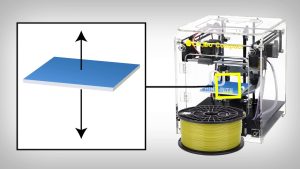
How Does 3D Printing Work?
A 3D model is where it all begins. You can choose to download one from a 3D library or make one from scratch.
3D Software
Software tools come in a wide variety. On our page for 3D software, we have produced an overview. The next step after creating a printable file is to get it ready for your 3D printer. We refer to this as slicing.
Slicing: From file to 3D Printer
Slicing is the process of using slicing software to divide a 3D model into hundreds or thousands of layers. When your file is sliced, it’s ready for your 3D printer. Feeding the file to your printer can be done via USB, SD or Wi-Fi. Your sliced file is now ready to be 3D printed layer by layer.
Examples of 3D Printing
Since 3D printing is utilized in practically every industry you can imagine, it involves a wide range of technologies and materials. It’s crucial to consider it as a collection of many industries with a wide range of uses.
Rapid Prototyping & Rapid Manufacturing
Since the late 1970s, businesses have utilized 3D printers to produce prototypes throughout the design phase. Rapid prototyping is the term for these uses of 3D printers.
In summary, it’s quick and reasonably priced. It takes days rather than weeks to go from concept to 3D model to handling a prototype. Making iterations is simpler, less expensive, and requires no costly tools or molds.
Automotive
3D printing has been used for a long time by automakers. In addition to end-use parts, automotive businesses often print tools, jigs, fixtures, and spare parts. On-demand manufacturing made possible by 3D printing has reduced stock levels and shortened design and production cycles.
Aviation
The promise of stronger and lighter constructions provided by 3D printing is one of the main reasons why aviation adores additive manufacturing. Recent years have witnessed a number of advancements in the aviation industry, including the printing of increasingly important components.
Construction
Is wall printing feasible? Indeed, it is. Commercial 3D printed homes are already on the market. While some businesses print parts on-site, others do so prefab. Large-scale concrete printing systems with relatively large nozzles for a high flow rate are the subject of the majority of the concrete printing stories we examine on this page. It works well for applying concrete layers quickly and consistently. However, something a bit more agile and delicate is needed for really complex concrete work that fully utilizes 3D printing’s capabilities.
Consumer Products
In 2011, when we first began blogging about 3D printing, the technology was not yet ready for mass manufacturing. End-use 3D printed consumer goods, such as jewelry, shoes, and eyewear, are widely available these days.
Healthcare
These days, articles about 3D printed implants are frequently seen. Since those cases are frequently experimental, it may appear that 3D printing is still a cutting-edge technology in the medical and healthcare industries, but that is no longer the reality. In the past ten years, GE Additive has 3D printed over 100,000 hip replacements.
Food
The food business was long overtaken by additive manufacturing. Food Ink and Melisse are two restaurants that use this as a differentiator to draw in guests from all over the world.
Education
3D printers have long been used in classrooms by teachers and students. Students may quickly and affordably bring their ideas to life with 3D printing. Although degrees focused on additive manufacturing are relatively new, 3D printers have been used by universities for many years in various fields. One can participate in 3D printing through a variety of educational courses. Courses on topics related to 3D printing, such as CAD and 3D design, are offered by universities and can eventually be used for 3D printing.
Conclusion
3D printing has transformed modern manufacturing by seamlessly connecting digital design with physical production. From software modeling to hardware fabrication, its two-step process enables precision, speed, and flexibility across industries. As innovation continues to expand its applications, partnering with the right manufacturing expert matters. At RPM Fast, explore our 3D printing, CNC machining, and rapid prototyping services tailored to your production needs.
