 Skip to content
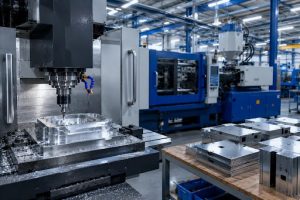
Most manufacturing advice is written for companies producing tens of thousands of parts. The economics are clear at that scale: invest in hard tooling, optimize cycle times, drive down cost per unit. But a large portion of real engineering and procurement work happens well before that volume is justified, and sometimes it never gets there.
Low-volume manufacturing fills that gap. It’s the category of processes, strategies, and supplier relationships that make production viable at quantities from a handful of parts to several thousand. This guide explains what low-volume manufacturing means, which processes fit where, and how to choose the right approach for your stage and budget.
What Is Low-Volume Manufacturing?
Low-volume manufacturing refers to production runs that yield parts in quantities roughly between 10 and 10,000 units. There’s no universal cutoff, and the right threshold varies by industry and part complexity, but the defining characteristic is that the economics don’t yet justify mass-production tooling.
At this scale, the goal isn’t the lowest possible piece price. It’s keeping production moving while controlling risk and preserving flexibility for design changes. A purchasing manager sourcing 500 enclosures for a product launch has different constraints than one ordering 50,000. Low-volume manufacturing is built around those earlier constraints.
It’s also worth separating low-volume manufacturing from prototyping. Prototyping validates a design. Low-volume manufacturing produces parts that meet final production specifications, even if the quantities are small. The distinction matters for quality systems, materials, and supplier selection.
When Low-Volume Manufacturing Makes Sense
Several product scenarios consistently point toward a low-volume approach rather than committing to full production tooling upfront.
The clearest case is launch-stage products with unproven demand. Committing to hard tooling before validating product-market fit creates unnecessary financial risk. Low-volume manufacturing lets teams enter the market with real parts while preserving capital and leaving room for design iteration based on customer feedback.
Engineering changes are another driver. If the product is still evolving, driven by test results, regulatory feedback, or assembly learnings, a low-volume process that accommodates changes costs less than modifying a production mold. This is common in medical devices, industrial equipment, and any product where field data shapes the final design.
Bridge production is a third scenario. While full-scale production tooling is being engineered and qualified, low-volume runs keep product available in the market. The parts are production-intent, not prototypes, but the volume is constrained by where the program sits in its lifecycle.
The Main Low-Volume Manufacturing Processes
Different processes serve different volume ranges, materials, and part geometries. Understanding where each fits prevents costly missteps.
CNC Machining
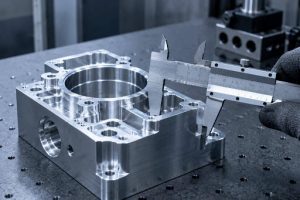
CNC machining removes material from a solid block to produce a part. There’s no tooling cost in the traditional sense: the program lives in software, and design changes cost nothing beyond updated CAD. It supports metals, engineering plastics, and composites, and achieves tolerances tighter than most other low-volume processes. It’s the right choice for structural parts, housings requiring tight fits, and anything where material properties matter as much as geometry. RPM Fast’s CNC machining services support both prototype and production-intent quantities.
Cast Urethane
Cast urethane uses a silicone mold made from a master pattern to produce parts from polyurethane resins. The tooling is inexpensive and fast to produce, and the process can simulate the look and feel of injection molded plastic parts at quantities of 10 to 100 units. It’s particularly useful for consumer product development, overmolded components, and parts with complex surface geometry. The trade-off is that silicone molds wear after roughly 25 to 50 pours, making it unsuitable for sustained production. See how RPM Fast’s cast urethane service fits into a low-volume strategy.
Rapid Injection Molding
Rapid injection molding uses aluminum tooling instead of production-grade steel, reducing mold cost and cutting lead time from weeks to days. Parts produced are fully injection molded: they carry the material properties, tolerances, and surface finish of production parts. This is the process to use when design is stable enough for functional testing, quantities are between 50 and 10,000 units, and production-grade material specification matters. RPM Fast’s rapid injection molding service delivers parts in as few as 3 to 5 business days.
Sheet Metal Fabrication
Sheet metal fabrication covers cutting, bending, and forming metal sheet into enclosures, brackets, and structural components. For low-volume work, it’s largely tooling-free: laser cutting and press braking handle most geometries without dedicated dies. Lead times are short, design changes are low-cost, and the process supports a wide range of metals and finishes. It’s the natural choice for electronics enclosures, mounting hardware, and structural frames. RPM Fast’s sheet metal fabrication service handles low-volume runs from a single unit up.
Choosing the Right Process
The table below compares the processes most commonly used for low-volume production across the factors that matter most to engineering and procurement teams.
| Process | Tooling Cost | Best Volume | Lead Time | Best For |
|---|---|---|---|---|
| 3D Printing | None | 1-500 parts | Hours to 2 days | Early prototypes, iterative design |
| CNC Machining | None | 1-200 parts | 1-5 days | Metal and plastic parts, tight tolerances |
| Cast Urethane | Low ($200-$1,000) | 10-100 parts | 1-2 weeks | Overmolds, rubber-like parts, consumer products |
| Rapid Injection Molding | Medium ($1k-$10k+) | 50-10,000 parts | 3-5 days | Production-intent plastic parts, functional testing |
| Sheet Metal Fabrication | Low-medium | 1-500 parts | 3-7 days | Enclosures, brackets, structural components |
The right process depends on three variables: the volume you need, whether the design is stable, and the material specification your part requires. A team still iterating on geometry should lean toward CNC machining or cast urethane. A team with a locked design needing 500 functional plastic parts should look at rapid injection molding.
Working with an ISO 9001:2015 certified manufacturer that handles multiple processes under one roof simplifies this decision. It eliminates the friction of re-qualifying suppliers as volumes change and keeps quality documentation consistent from early prototypes through to production parts.
The Cost Reality of Low-Volume Production
Per-unit costs in low-volume manufacturing are higher than mass production. A part costing $0.50 at 100,000 units might cost $8 to $15 at 200 units. The more relevant question is whether that premium outweighs the risk of a $5,000 to $20,000 mold modification and weeks of delay after committing to production tooling too early.
Frequently Asked Questions
What volume range is considered low-volume manufacturing?
Low-volume manufacturing typically covers production runs from 10 to 10,000 units, though the practical boundaries vary by industry and part complexity. Below 10 units, most teams are still in prototyping. Above 10,000 units, the economics of production tooling and mass manufacturing processes usually become more favorable.
Is low-volume manufacturing more expensive than mass production?
Per-unit costs are higher in low-volume manufacturing, and that’s expected. The trade-off is lower tooling investment, preserved design flexibility, and reduced risk before demand is validated. For most teams at early production stages, the cost premium is justified by the ability to make design changes without expensive tooling modifications.
What is bridge manufacturing?
Bridge manufacturing refers to low-volume production runs that fill the gap between product launch and full-scale production readiness. While final production tooling is being engineered and qualified, bridge manufacturing keeps product available in the market using processes like rapid injection molding or CNC machining. The parts are production-intent, not prototypes.
Which low-volume manufacturing process is right for plastic parts?
It depends on volume and design stability. Cast urethane works well for 10 to 100 parts when the design is still evolving. Rapid injection molding is the right choice for 50 to 10,000 parts when the design is stable and production-grade material properties are required. The material specification and surface finish requirements also affect the decision.
Next Steps
Low-volume manufacturing is the right strategy for a specific stage of a product lifecycle. The most practical approach is to work with a single manufacturer capable of supporting multiple processes, which eliminates supplier friction and keeps quality documentation consistent from prototype through production.
If you’re evaluating low-volume manufacturing options for a current project, request a quote from RPM Fast and the team will help identify the right process for your volume, material, and timeline.
